
Ragnar Axelsson Greenland
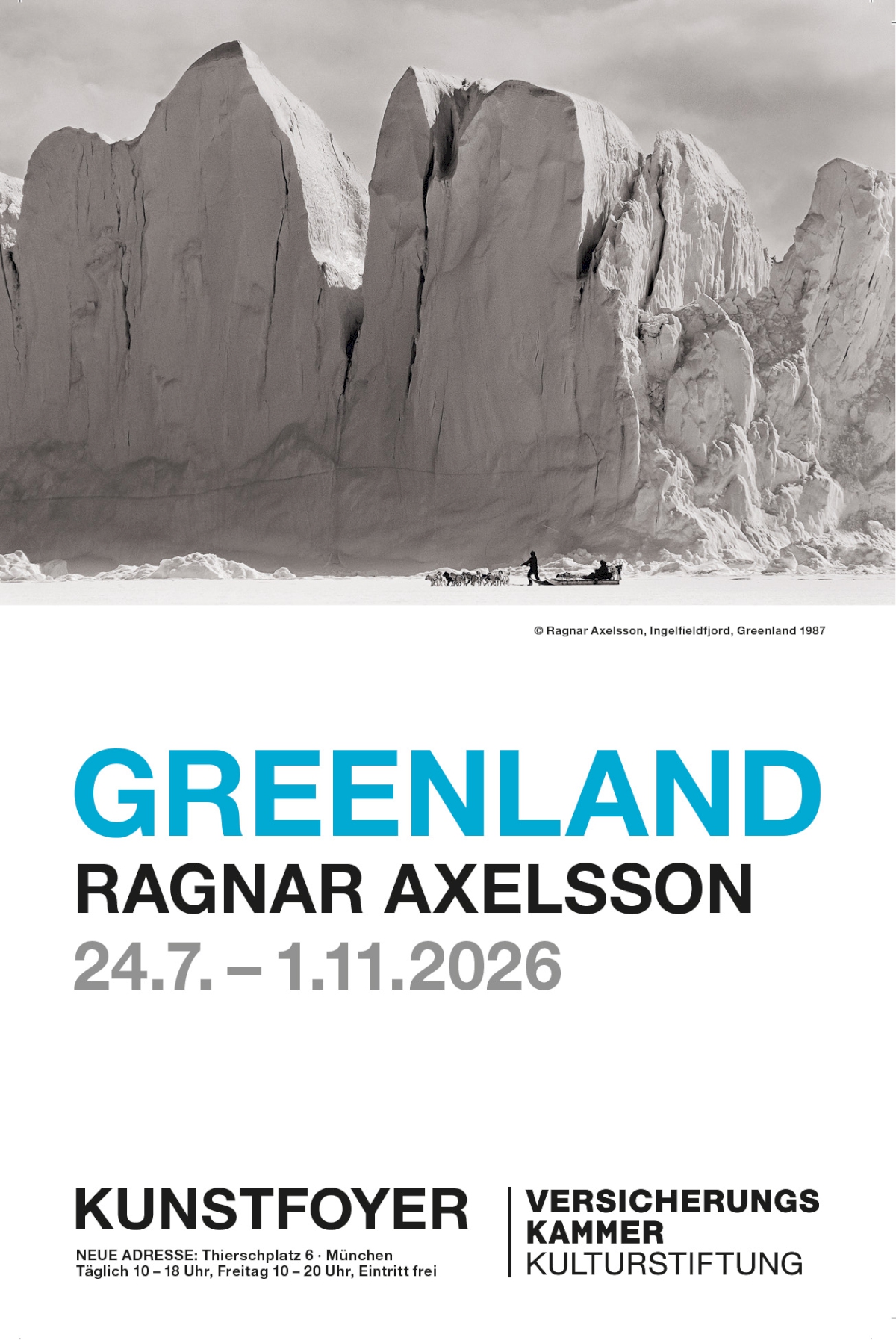
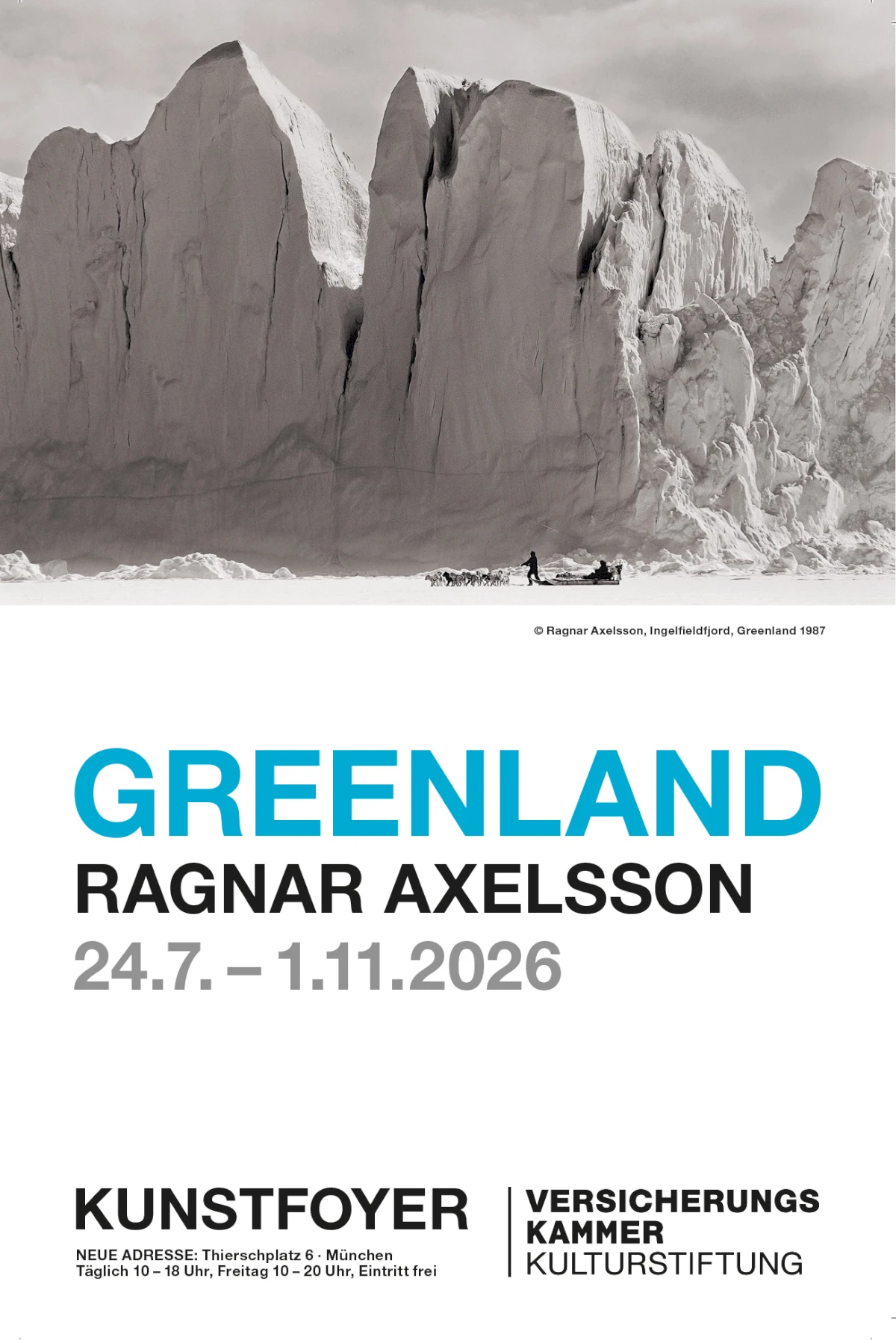
Ragnar Axelsson © Ingelfieldfjord, Greenland, 1987 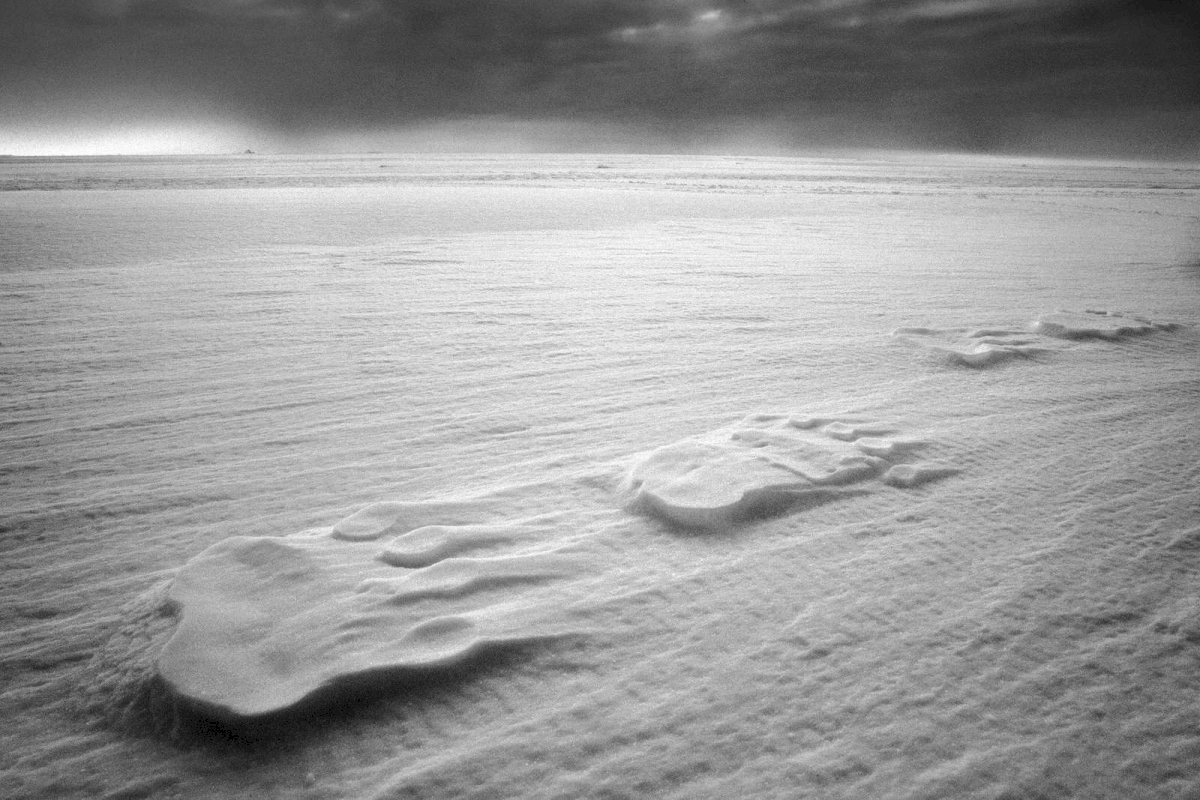
Bear Tracks on the Sea Ice, Greenland, 2010. © Ragnar Axelsson 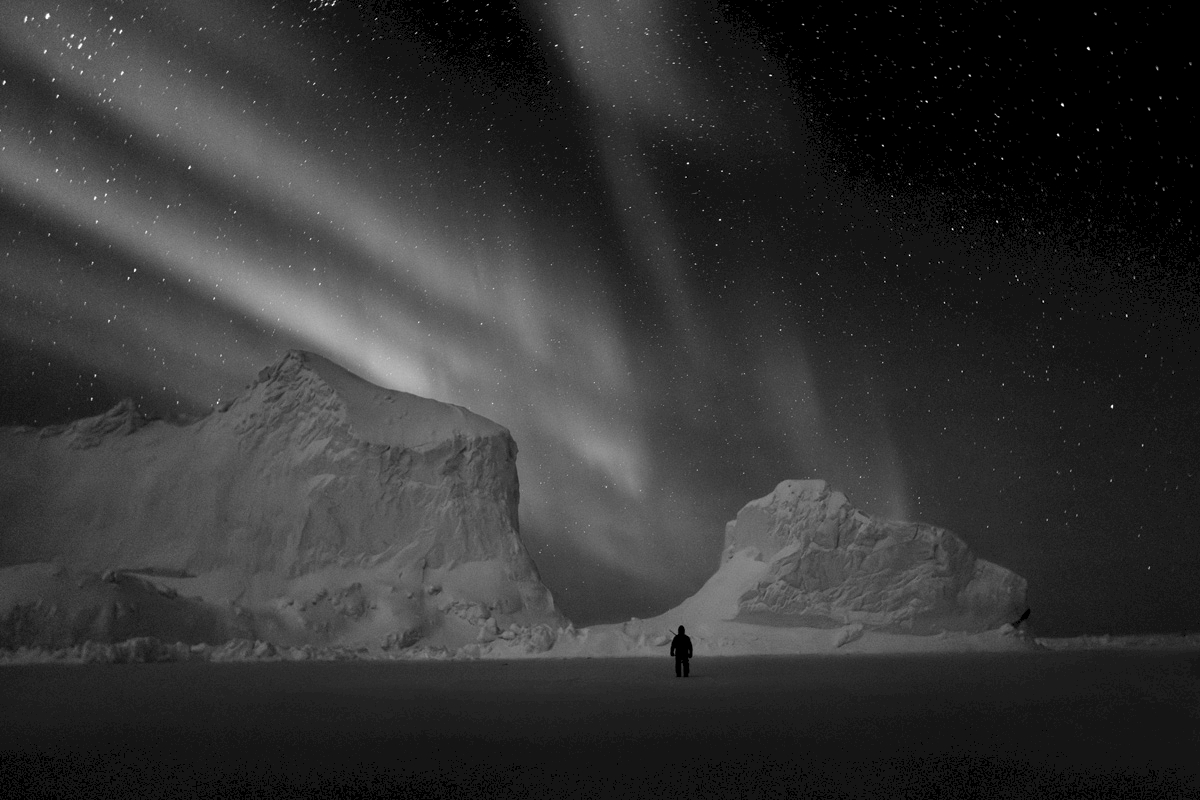
Dancing Northern Lights, Kangertittivaq Fjord, Greenland, 2026. © Ragnar Axelsson 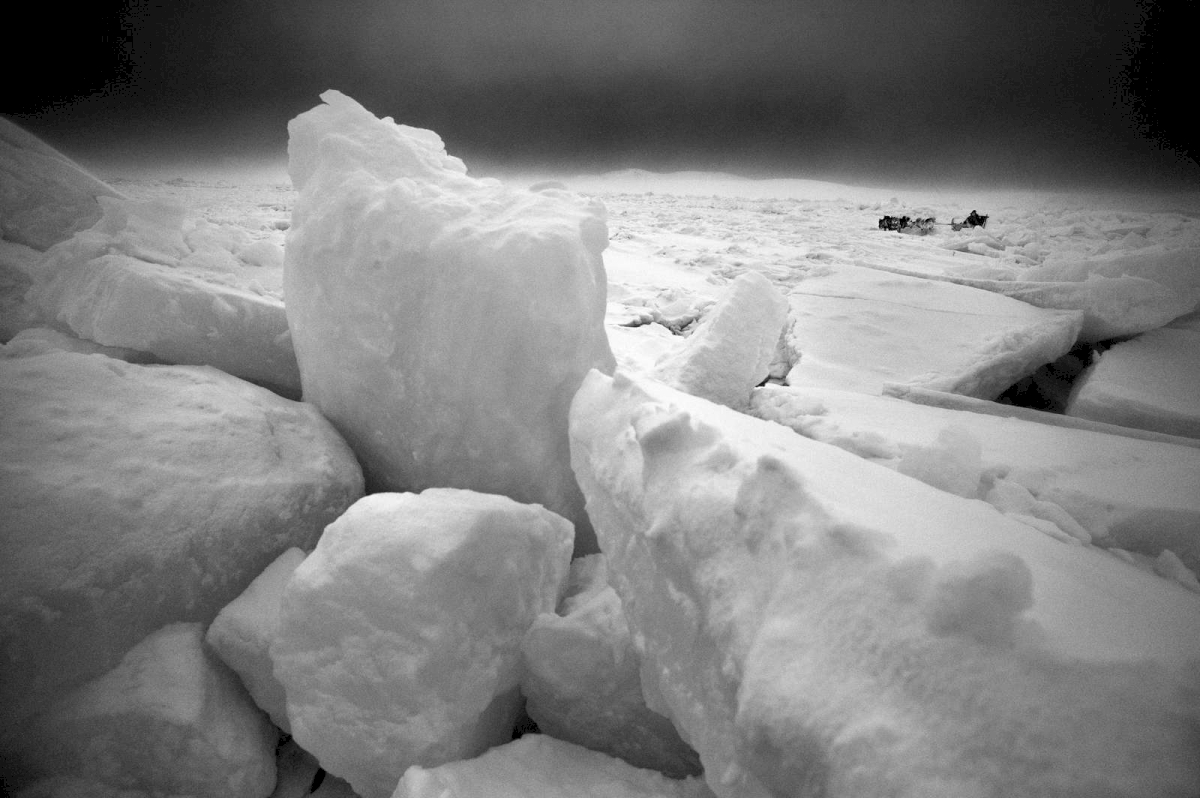
A Hunter on a Dog Sled on Rough Sea Ice, Kangertittivaq Fjord, Greenland, 2013. © Ragnar Axelsson 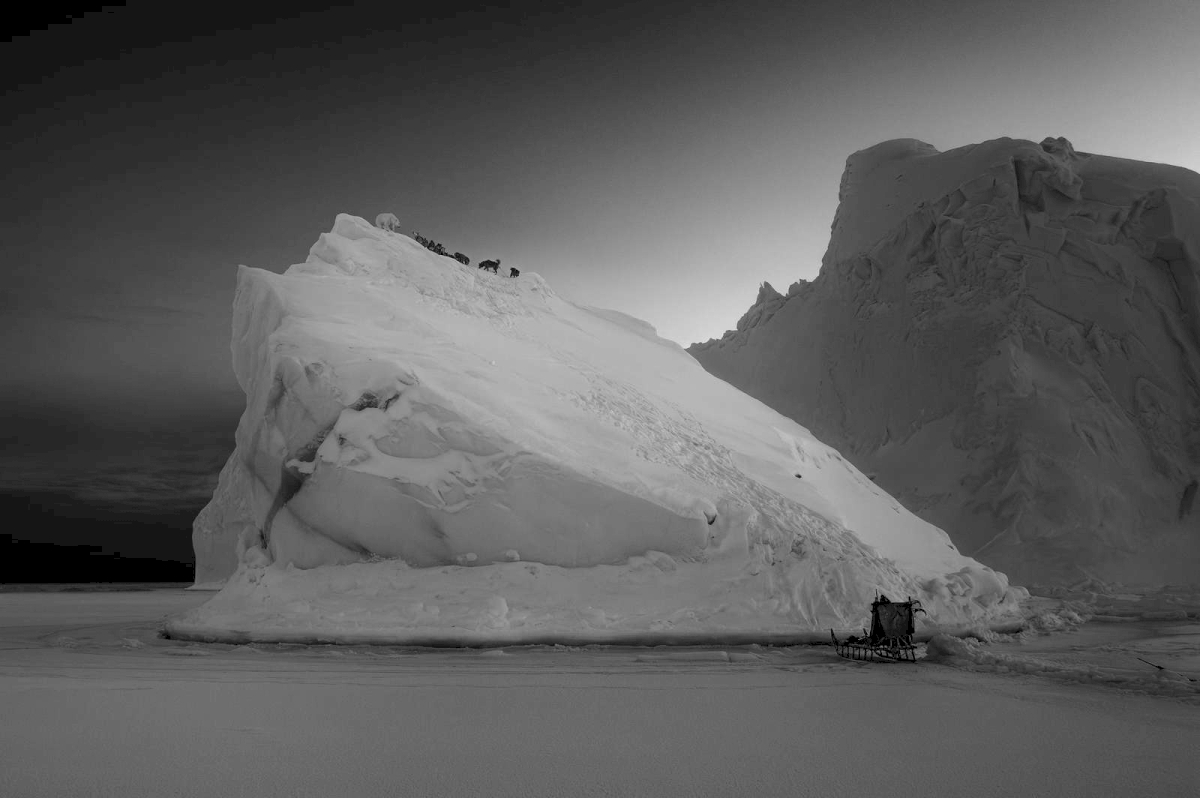
Polar Bear fleeing from Sled Dogs, Greenland, 2026. © Ragnar Axelsson 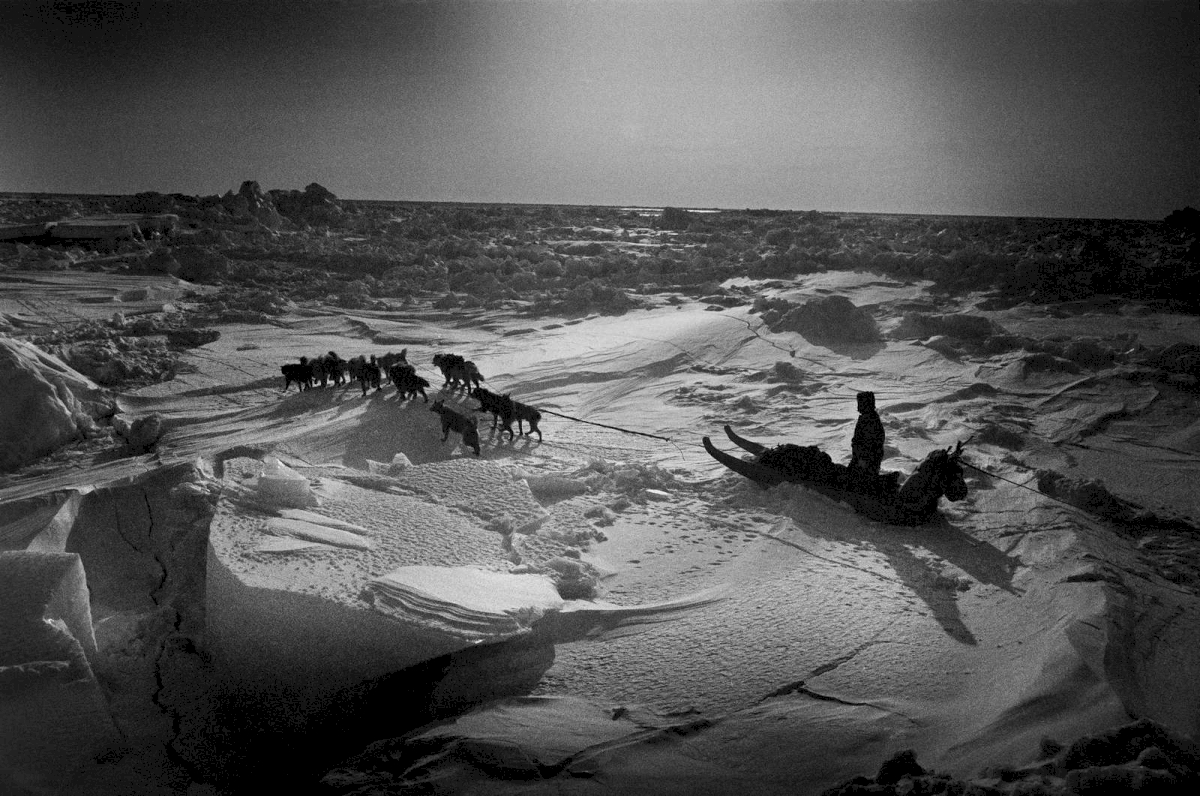
Hjelmer Hammeken, Hunter on the Sea Ice, Kangertittivaq, Greenland, 1995. © Ragnar Axelsson 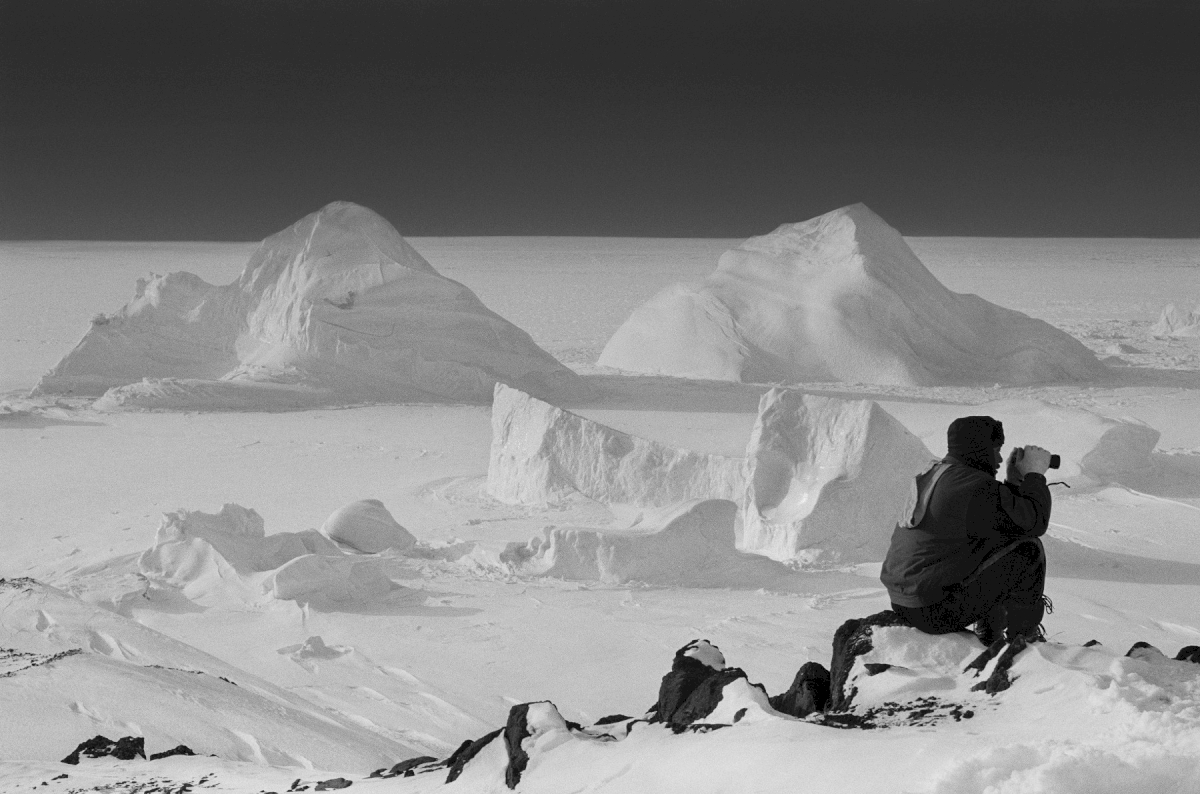
Hjelmer Hammeken in Kangertittivaq, Greenland, 1995. © Ragnar Axelsson


“Never has it been more important than now to document, in words and images, the lives of the people of the Arctic and the changes they are undergoing, so that the world can see what is happening.” (Ragnar Axelsson, *1958 in Reykjavik)
Eight states, a multitude of Indigenous peoples, rival great powers: the Arctic is at once a homeland, a climate indicator, geopolitical terrain, and a reservoir of resources. In the Arctic, what global heating is causing becomes drastically apparent: permafrost is thawing, coastlines are eroding, ecosystems are being thrown off their centuries-old courses. The retreat of the ice is increasingly making itself felt globally as well: sea levels are rising and weather systems are falling out of balance. At the same time, power-political and economic appetites are growing. New shipping routes, more easily accessible raw materials, and geopolitical tensions are turning the Arctic into an arena of conflict. Since Russia’s war of aggres-sion against Ukraine - but also owing to China’s ambitions for a “Polar Silk Road” - the urgently needed multilateral engagement for climate protection is dwindling even further. Most recently, GREENLAND, in particular, has become a projection screen for imperialist narratives and fantasies. Respect for international law, trust in international institutions, and the willingness to engage in supranational cooperation have declined on many levels.
For more than 40 years, the Icelander Ragnar Axelsson has been photographing people, animals, and landscapes in the most remote regions of Greenland, Iceland, and Siberia. In dramatic black-and-white images, he captures the existential human experience at the edge of the habitable world. Rather than merely illustrating climate change, his photographs reveal how environmental changes are experienced by the people whose livelihoods depend on land, sea, and ice.
The exhibition Ragnar Axelsson Greenland comprises 60 works. His magnificent photographs and texts convey both beauty and vulnerability. They tell, with great empathy, of resilience, loss, dignity, and a way of life under pressure from an outside world that ignores their existence or seeks to dictate to them how they are to live. Ragnar Axelsson’s Greenland shows the reality of a rapidly changing world – a place of singular beauty and constant peril.
A world melting before our eyes – with incalculable global consequences.
RAGNAR AXELSSON
For more than four decades, Ragnar Axelsson, RAX, has photographed the people, animals and landscapes of the Arctic. Since first travelling to Greenland in the early 1980s, he has returned year after year, creating one of the world’s most sustained photographic records of life in the High North. Over the past seven years alone, he has travelled to Greenland an average of three times each year, continuing a body of work that spans generations.
Working almost exclusively in black and white, Ragnar’s photographs explore the fragile relationship between people, animals and nature. His work is shaped by patience and long-term commitment rather than observation from a distance. For more than thirty years he has documented the life of Greenlandic hunter Hjelmer Hammeken, following him across the sea ice through changing seasons, disappearing hunting grounds and a rapidly transforming Arctic. Their friendship has become one of the defining narratives of Ragnar’s work and forms the foundation of one of the most extensive long-term documentary projects ever undertaken in Greenland.
Few photographers have returned to the same Arctic communities over such a long period. Ragnar’s photographs have become both a historical record and an intimate portrait of lives lived at the edge of the inhabited world. Rather than illustrating climate change, his work reveals how environmental change is experienced by the people whose everyday lives depend upon the land, the sea and the ice.
Ragnar worked as a photojournalist for the Icelandic newspaper Morgunblaðið from 1976 until 2020, while also undertaking assignments across Europe, Africa and Asia. His photographs have appeared in publications including The New Yorker, National Geographic, TIME, Newsweek, LIFE, GEO, Stern and Polka, and have been exhibited internationally.
His retrospective „Where the World is Melting“, accompanied by the publication of the same name from Kehrer Verlag, presents photographs spanning over 40 years from Greenland, Iceland, and Siberia. The highly acclaimed exhibition was curated in 2021 by Isabel Siben for the Kunstfoyer of the Versicherungskammer Kulturstiftung and subsequently shown at the Deichtorhallen in Hamburg and the Ernst Leitz Museum in Wetzlar. It reflects the growing international recognition of his work as an important visual record of change in the Arctic.
Ragnar has published numerous books, including Faces of the North, Jökull, Arctic Heroes, Behind Mountains and Where the World is Melting. His work has received numerous honours, including the Icelandic Literary Prize for Non-fiction, the Leica Oskar Barnack Award (Honourable Mention), the Grand Prix Photo de Mer in Vannes, and the Knight’s Cross of the Order of the Falcon, Iceland’s highest national honour.
Today Ragnar continues to return to Greenland several times each year. His photographs stand as a rare long-term testimony to a world undergoing profound environmental and cultural change, preserving not only disappearing landscapes but also the memories, knowledge and resilience of the people who continue to call the Arctic home.